


Another note concerns the use of air.
In order to overcome the difficulties due to the low interaction
probability at the operating pressure of the machine
(
 nPa or
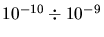 torr),
calculations are performed with gas density corresponding to the atmospheric
pressure. Therefore, the obtained results will have to be linearly
scaled to the operating pressure.
torr),
calculations are performed with gas density corresponding to the atmospheric
pressure. Therefore, the obtained results will have to be linearly
scaled to the operating pressure.
Last, but not least, we recommend to use standard names for the basic materials (elements) in order to have the correct low energy cross sections for neutrons (see the manual). In this particular problem neutrons are not relevant, but the use of PRECISIO default activates low energy neutron transport and interaction, unless this is inhibited by some directive which overwrites the DEFAULT itself.