Photo by Articulate Matter
|
How much of the technology
- that's pulling the IPv6 protocol from all sides
- the we currently don't use over IPv4
would we like to deploy?
- Transport layer autoconfiguration.
- Mobile IP applications.
- Site-, organisation-, NREN- or HEP-wide mobile IP applications.
- IPSEC (most of transport layer security is now applied either below or above Level 3).
- Anycast address applications ?
Access authorisation options

|
- Maintenance of (long) ACLs allowing only network traffic to and from
legitimately assigned IPv6 addresses.
- IEEE 802.1x enforced everywhere ?
- IPSEC enforced everywhere (but it may not be enough to protect
IPv6 Neighbour Discovery, see
rfc 3971) ?
- Would a NREN-based identity provider be a good trust anchor for these systems ?
- Would we trust automatic DNS updates if we had strong authentication,
authorisation and encryption everywhere ?
|
Transition scenario: dual stack everywhere.
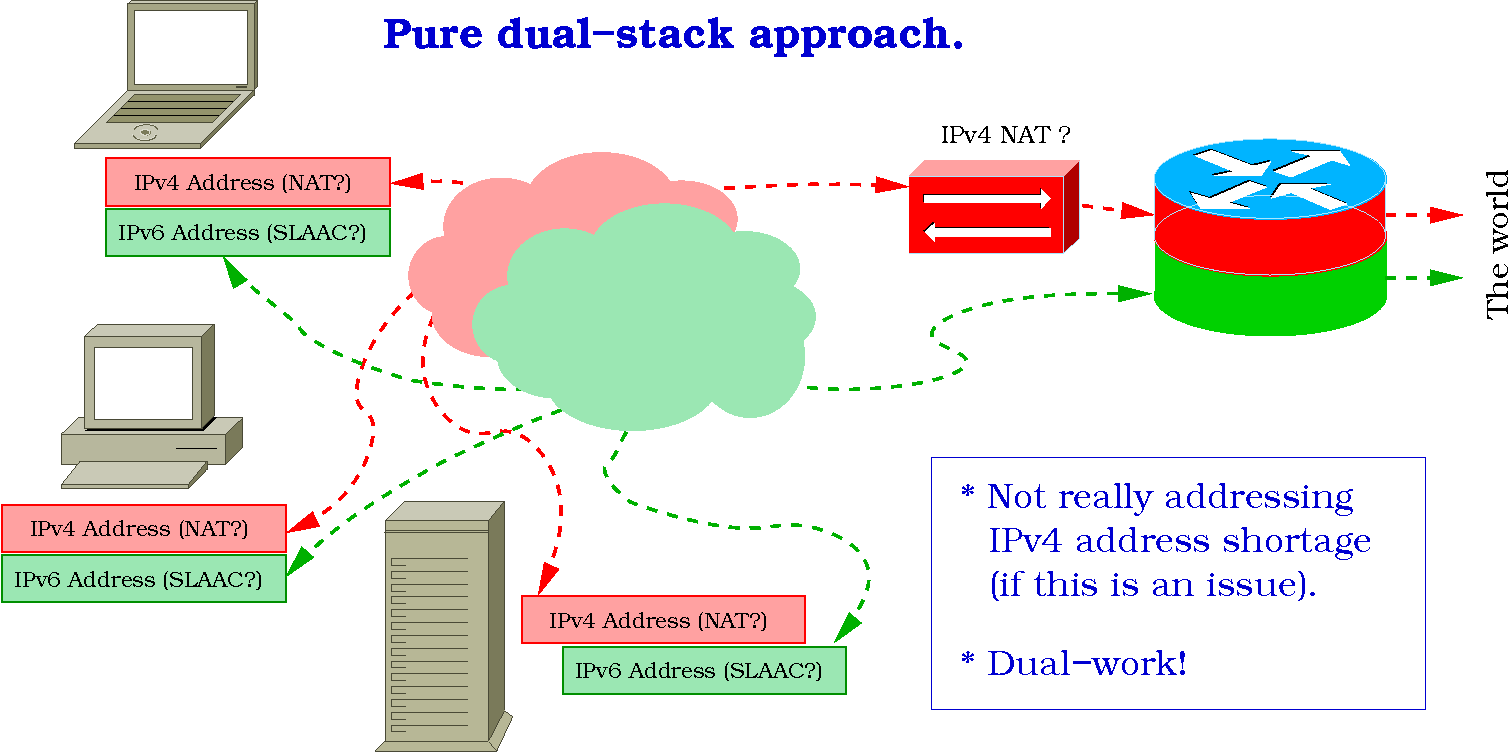
Transition scenario: IPv6-only hosts? (1)
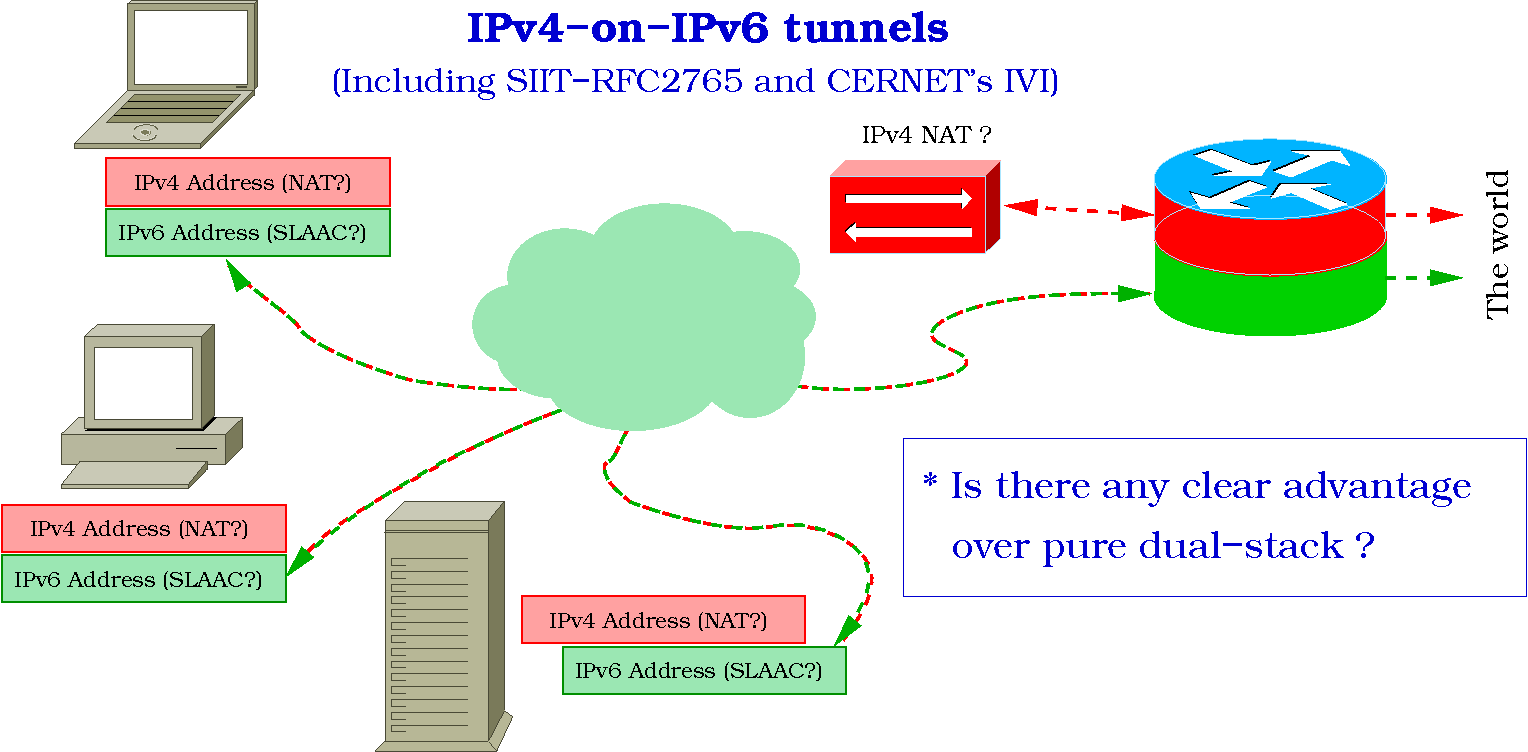
Transition scenario: IPv6-only hosts? (2)
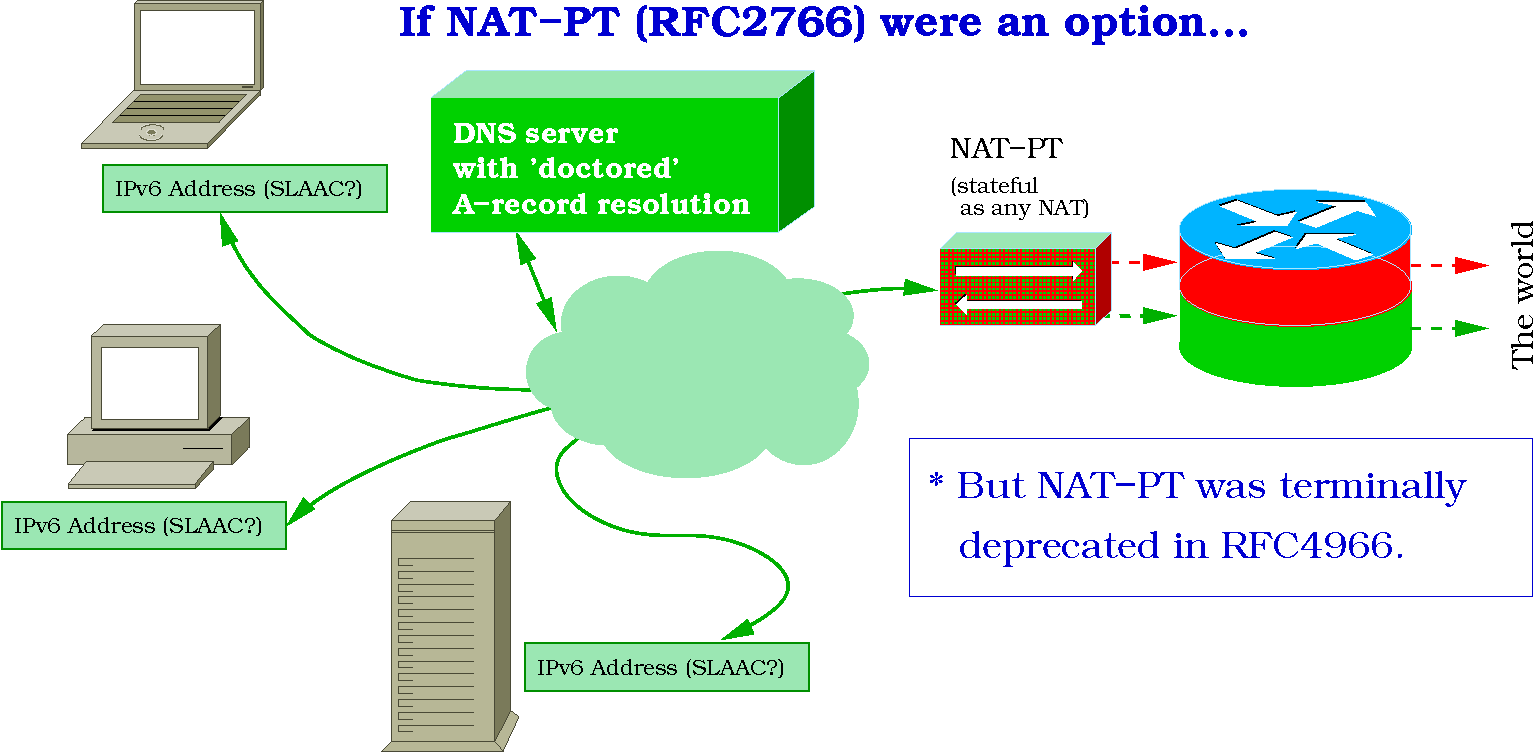
Monitoring tools for IPv6
- It's hard to think about a real wide-scale deployment of
IPv6 without up-to-date and trusted level-3 network monitoring tools.
- Both commercial and free tools keep evolving
slowly, following market demand (or lack thereof)...
- But rogue router advertisements
carrying arbitrary
prefix and route information do hurt us today, with default
Windows and Linux installations, and no
IPSEC and SEND
deployed. (One should at least be running a cleanup tool
like ramond).
-
NDPmon, an ARPwatch substitute, started being developed in 2006.
As of now (v1.4.0 - August 2009!) it is able to store address-MAC
associations in an XML file and send reports via e-mail and
syslog. Not much.
- OpenVAS
added initial IPv6 support in December 2009 with
version 3.0.0.
- Any experience with other (commercial) tools ?
Transition: when should we do it ? (1)
Preliminary considerations:
- Transition is driven by useful services.
- Likely not the
IPv6 cool stuff
or any 'killer' IPv6-only application.
- It may be easier to complete the transition for specialised
services (e.g. distributed computing) than for generic
users.
- Once services can be contacted over IPv6 (AAAA record is present in
DNS), they are normally preferred (and we need to keep it
that way), so they must be as reliable
as their IPv4 counterparts
- Long, accurate testing.
- Short test runs of default IPv6 access (e.g. 'IPv6 days')
- It will be a long process. Do drop-dead-deadlines help here ?
- The 2013 LHC shutdown seems a very close date for general transition.
Transition: when should we do it ? (2)
- One service that is known to work well on IPv6 is SMTP e-mail handling.
- Having AAAA MX records for our sites should be painless.
- But: how many people around us are actually doing this ?
- Growth rate shown in the graph is 0.06 % per month.
- Similar to the Google IPv6 statistics,
that show a more marked increase in 2011 however.
|

|
Conclusions
- The INFN IPv6 interest group is willing to partecipate in distributed
testbed activities.
- As we are facing various open options for address allocation,
network access authorisation, active monitoring, etc., it
would help if we could share best practices
in this field.
- There are no approved protocol translation mechanisms
that remove the need to have a proper IPv4 public address allocated
for hosts that need to communicate with IPv4 services.
(NAT-PT was
deprecated in rfc 4966,
while both SIIT
and
IVI
require an IPv4 address), so a full dual-stack deployment
appears to be the only reasonable transition method available for us.
- We'd welcome not just the IPv6 certification of HEP tools, but also
a community effort to advance the dual-stack deployment of general
purpose services (web, e-mail, etc.).
The IPv6 World Day last June 8th
- The day went largely unnoticed. We had no report of any issue from
within INFN.
- Effect visible on the GARR/Global Crossing links:
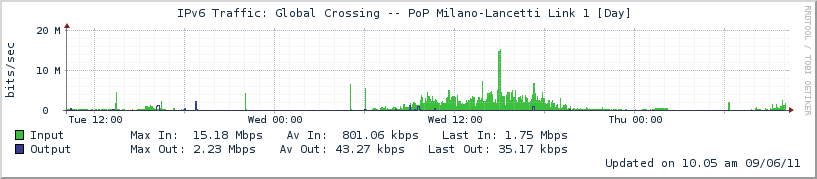
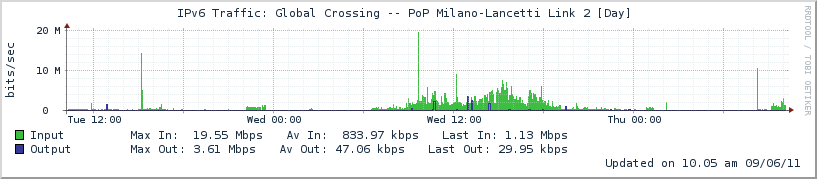
- Inbound IPv6 traffic (integrated over 24 hours) increased from
15 GBytes to 105 GBytes.
- Outbound traffic increased from 3.6 to just 3.8 GBytes.
|